Ya’ll Need Jesus: A Designer’s Real-World Review
As a designer who has spent years navigating the intersection of digital assets and physical thread, I approach every new download with a critical eye. The market is flooded with T-Shirt Designs and generic Graphics, but finding a piece that translates well from a screen to a finished embroidery project requires more than just a pretty preview. Today, I am evaluating the Ya’ll Need Jesus design. This isn't just about downloading a file; it is about understanding how this specific visual identity holds up under the scrutiny of a machine needle, stabilizer, and real customer expectations.
The First Impression: Mood and Visual Weight
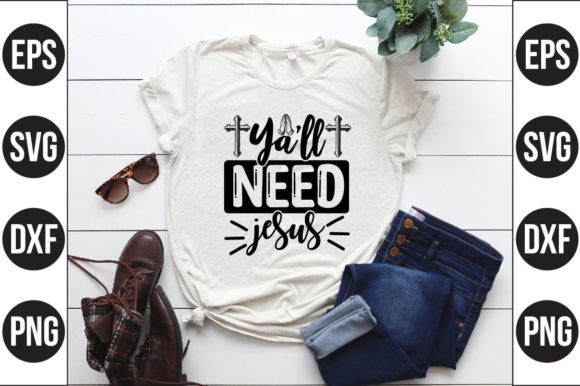
When you first open the preview for Ya’ll Need Jesus, the immediate feeling is one of bold, unapologetic statement-making. The typography and layout suggest a design that thrives on clarity rather than intricate subtlety. In the world of machine embroidery design, simplicity often wins when it comes to legibility and stitch integrity. This design feels like it was born for custom apparel where the message needs to be read from a distance, such as on a sweatshirt worn at a community event or a tote bag carried through a busy market.
The visual personality here is confident. It does not rely on delicate filigree or complex shading that can get lost in translation during digitization. Instead, it leans into strong lines and solid shapes. For an Etsy seller or small shop owner looking to expand their inventory with faith-based items, this kind of straightforward aesthetic reduces the risk of stitching errors. It signals to the customer that this is a handmade product with intention behind every stitch.
Testing the Waters: A Real-World Scenario
To truly understand the utility of Ya’ll Need Jesus, let's place it in a realistic production scenario. Imagine you are preparing a batch of personalized gifts for a holiday boutique. You have selected a sturdy, mid-weight canvas tote bag as your base. You load the Ya’ll Need Jesus embroidery file into your software. As you map out the placement, the design fits perfectly within a standard 5x7 hoop size, which is crucial for maintaining efficiency without needing to re-hoop multiple times.
During the test run on scrap fabric, the stitch density appears balanced. There are no overly dense areas that might cause puckering on a textured fabric, nor are there gaps that would reveal the background material. If you were to use this for sweatshirt embroidery, the design would likely sit flat against the fleece, avoiding the bulkiness that plagues poorly designed text-heavy graphics. The result is a clean, professional finish that elevates the perceived value of the item. Customers buying these as personalized gifts expect durability and crisp lettering, and this design delivers exactly that.
Navigating Fabric and Hoop Challenges
While Ya’ll Need Jesus is robust, it is not immune to the physics of embroidery. As a professional reviewer, I must highlight where caution is required. If you attempt to scale this design down too significantly for a small cap or a baby onesie, the running stitch details in the lettering may become indistinct. Tiny lettering is the enemy of clarity in digital embroidery files. Always check your hoop size requirements before committing to a final run.
Fabric texture also plays a massive role. On a smooth cotton tee, the fill stitch will look sharp. However, on a thick, looped knit or a highly textured linen, the design might lose some definition. In these cases, using a heavy-duty stabilizer becomes non-negotiable. Without proper backing, the tension could distort the straight lines of the text, making the "Jesus" portion of the phrase look wavy or uneven. Similarly, if you are working with dark fabrics, ensure your thread colors offer high contrast. A light gray thread on black denim would render the message unreadable, defeating the purpose of the design.
Commercial Viability and Brand Consistency
For the creative entrepreneur running a craft business, consistency is key. Using a design like Ya’ll Need Jesus across various product lines—whether it is an embroidered patch, a kitchen towel, or a pillow cover—helps build brand recognition. The design's versatility allows it to transition seamlessly between casual wear and home decor. When customers see this consistent motif on different items, it reinforces the quality and identity of your shop.
This design also performs well in printable mockups used for social media marketing. Because the lines are clean, it photographs beautifully even before the stitching begins. This visual appeal drives buyer engagement and trust. Potential customers can easily visualize the finished product on their own wardrobe, increasing the likelihood of a sale. Whether you are selling at a craft fair or managing an online store, having reliable design assets that translate well in photos is half the battle.
Practical Notes for the Digital Download
It is important to remember that your purchase includes a DIGITAL DOWNLOAD ONLY. There is no physical product shipped to you. Your zip file contains essential formats including SVG, PNG, EPS, DXF, and JPEG, ensuring compatibility with Cricut and other major cutting and embroidery software. While the SVG and DXF files are excellent for cutting machines, remember that for actual stitching, you need to ensure the file is properly converted or used within your specific embroidery software to generate the correct applique design or stitch paths.
Before launching a commercial run, always perform a test stitch on a scrap of the exact fabric you intend to use. Check the thread colors against the lighting conditions of your workspace. Verify that the hoop size accommodates the design without cropping any edges. Inspect the small details to ensure no letters are merging together due to excessive density. These steps protect your reputation and ensure that every custom apparel item you sell meets professional standards.
Final Thoughts on Design Utility
In conclusion, Ya’ll Need Jesus stands out as a practical, high-utility asset for designers who prioritize clarity and impact. It avoids the pitfalls of over-complicated digitization while offering enough visual weight to make a statement. From holiday embroidery projects to everyday small shop products, this design proves that sometimes the most effective art is the simplest. By respecting the technical requirements of the medium—proper stabilizer, correct scaling, and thoughtful color selection—you can transform this digital graphic into a tangible, cherished item. For anyone looking to add meaningful, durable designs to their portfolio, this is a strong candidate for your next embroidery project.